
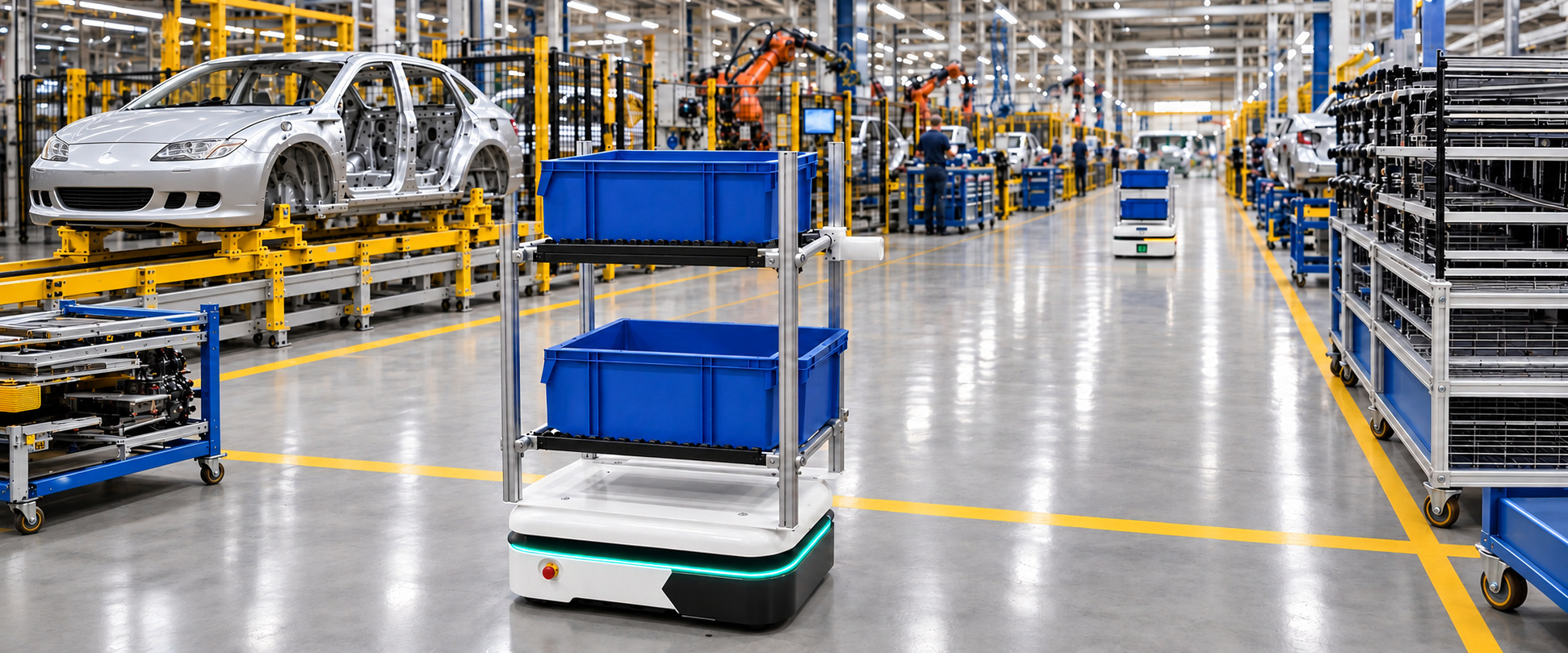
TROO®
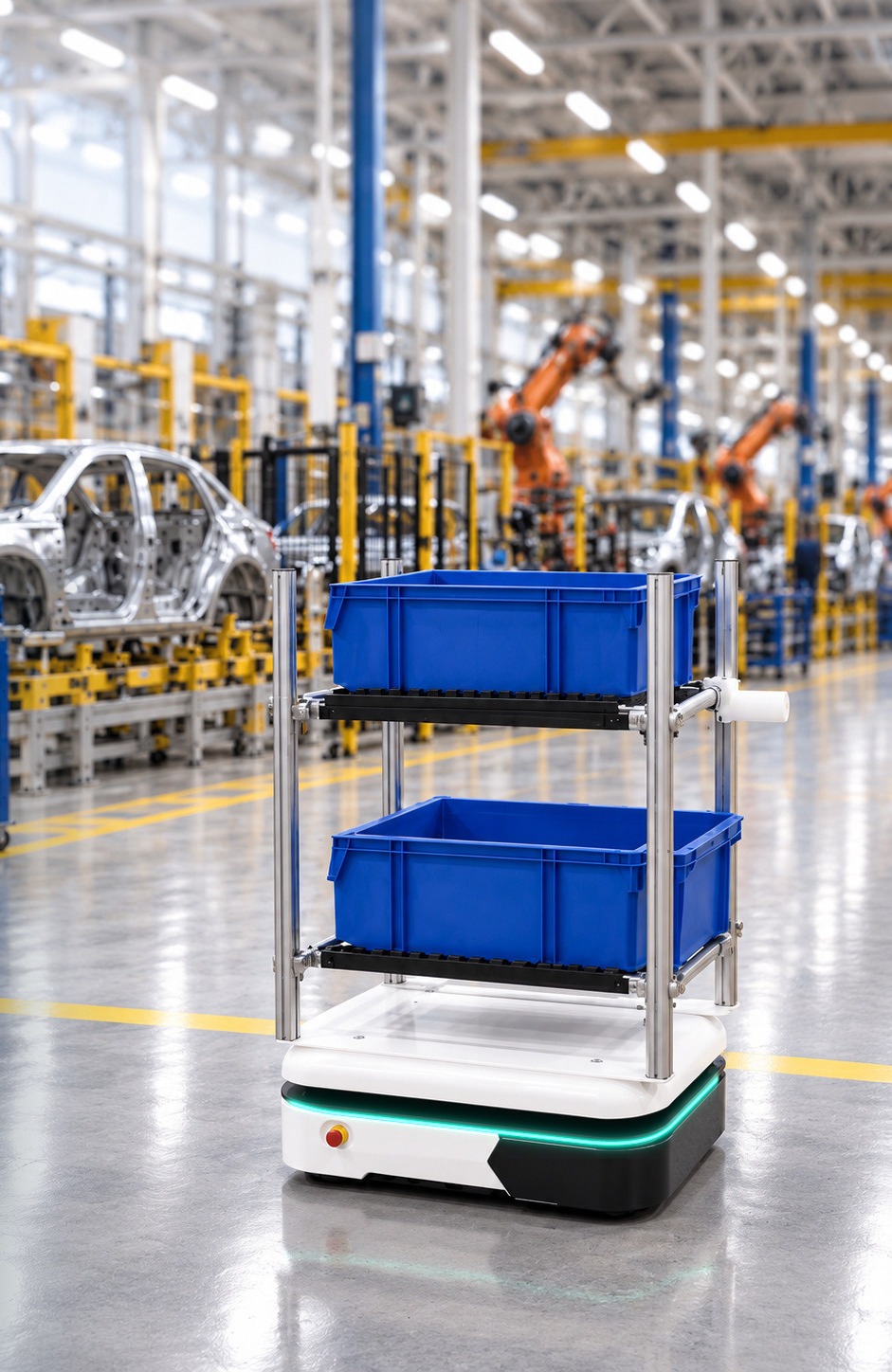
Troo® can transport loads of up to 300 kg in industrial environments autonomously.
It incorporates 3D LiDAR and a camera with AI models, which gives it the ability to recognize objects to avoid collisions and dynamically adapt to its environment.
Industrial mobility
TROO range
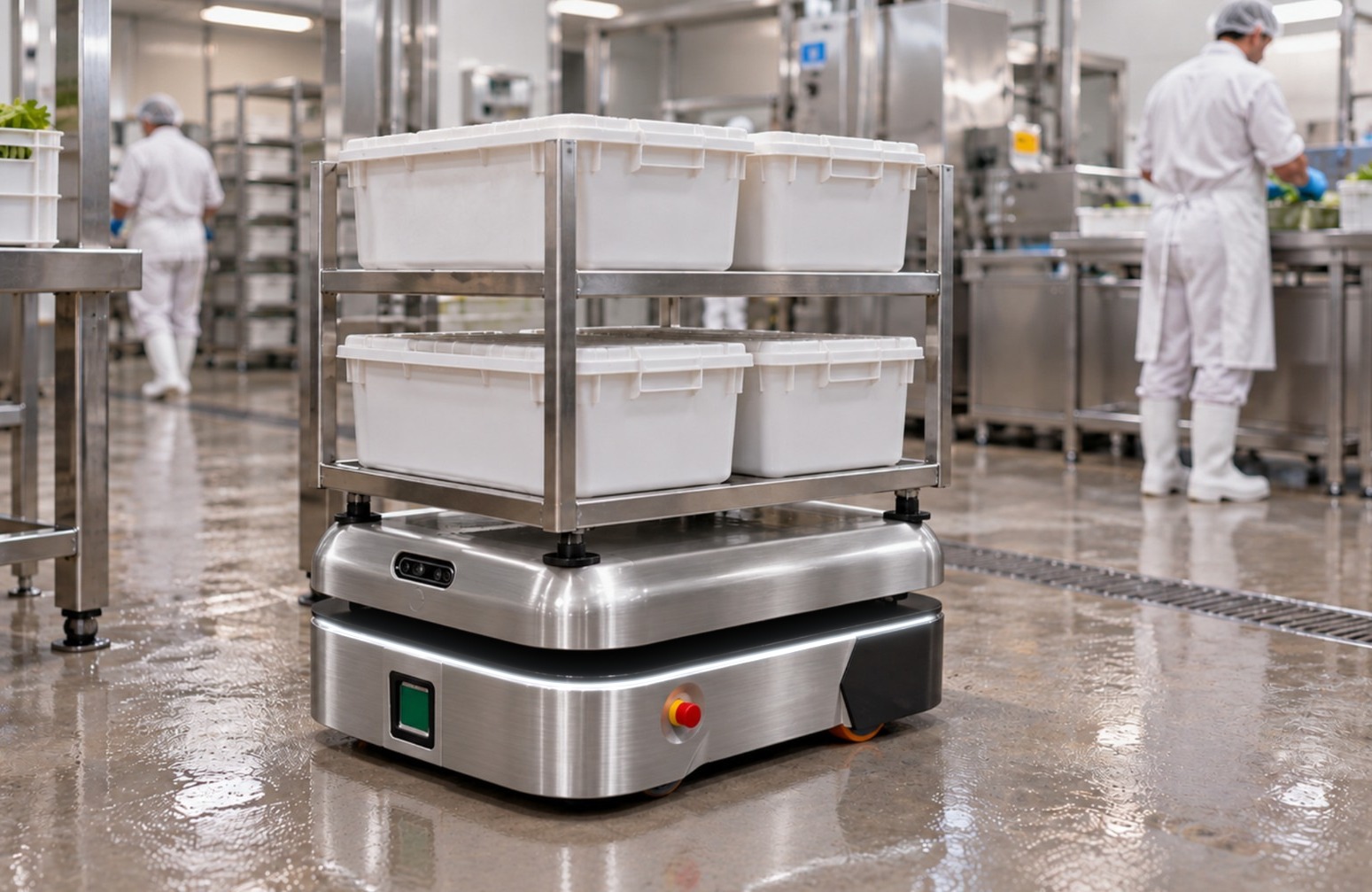
- TROO HC Food industry: wet rooms and routes with temperature changes · up to 300 kg View documentation >
- TROO+ Heavy loads: pallets and containers between warehouse, production and shipping · up to 1,500 kg View documentation >
- TROO+ HC Heavy loads in food processing, with the configuration adjusted to each plant · up to 1,500 kg View documentation >
- Fleet manager AI software: fleet maps, routes and status in a web interface View documentation >


Applications and their usage

Automotive sector
Automotive industries use our Troo® robots for transporting goods.

Pharmaceutical Industry
Transporting products within hospitals requires precise timing and security to prevent unauthorized access. Our robot, equipped with a controlled access system, ensures secure internal transportation in hospitals.

Aeronautics Industry
In the aeronautics sector, our technology is used for external inspections of parts and aircraft during the manufacturing process, ensuring all elements are correctly assembled.

Food sector
Moving raw materials to production lines is an ideal task for our Troo®, which is always ready and on time to meet production line demands.
Measurements and specifications
- Dimensions
740 x 520 x 310 mm
- Weight
90 kg
- Load Capacity
300 kg
- Maximum Speed
2,0 m/s
- Obstacle Detection
360º
- Charging Time
1 h
- Power output
165 W
- Battery
33,5 A/h

Traction, autonomy and integration
- Traction
Rear-wheel drive, caster wheels at the front
- Autonomy
Up to 8 h
- Integration
VDA 5050 · HTTP API
Autonomy depends on the load, the route and the working conditions.
TROO+ and TROO+ HC
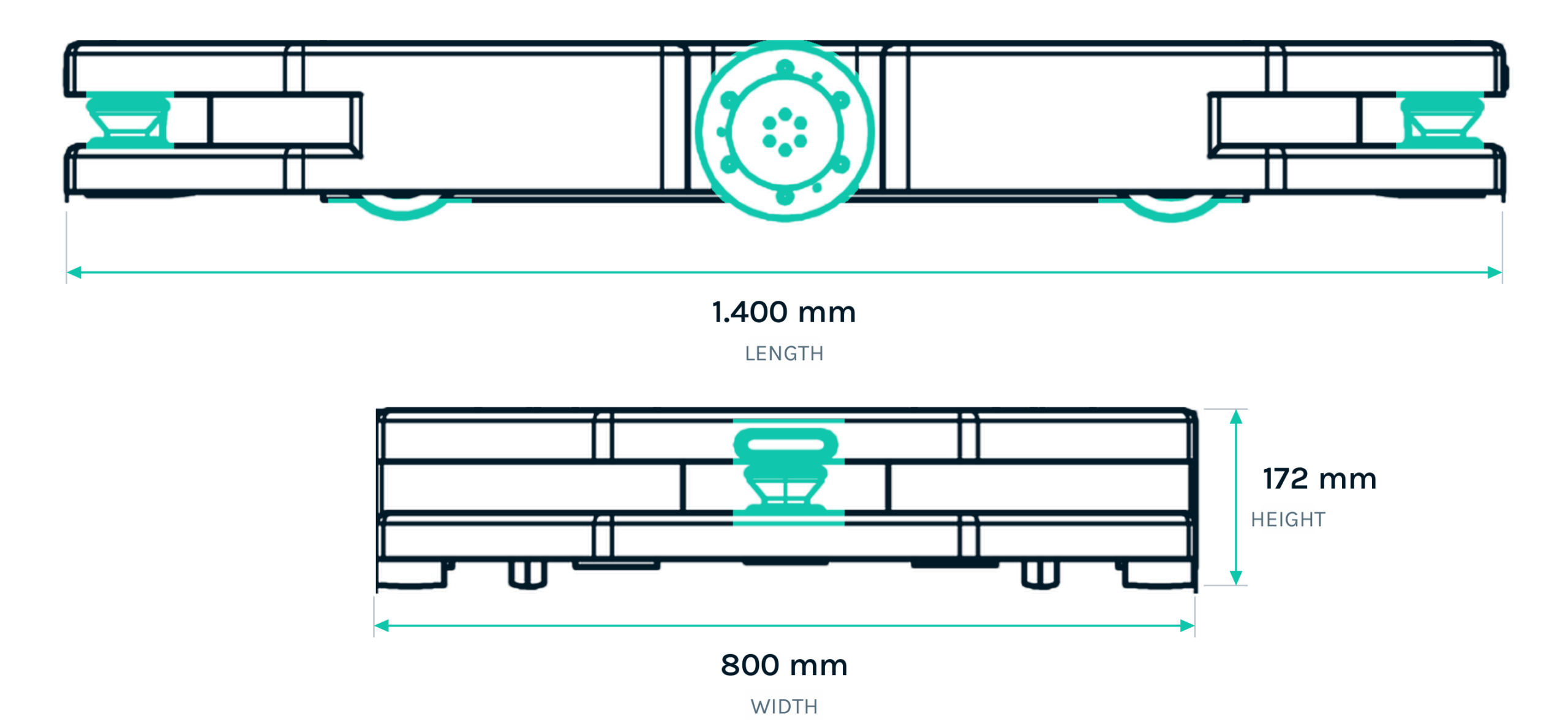
- Payload
Up to 1,500 kg
- Base (L × W × H)
1,400 × 800 × 172 mm
- Length with support
1,460 mm
- Approximate autonomy
Around 8 h
Base dimensions without top module or load. Autonomy depends on the load, the route and the working conditions.
Fleet management

Maps and routes
View of the workspace and the routes from the management platform.

Robot status
Fleet information to coordinate and supervise the operation from a single interface.

Plant integration
Communications adapted to the equipment and systems of each facility.

Connectivity
ROS 2, HTTP, MQTT and VDA 5050. Protocol support and integration are defined according to the configuration of each facility.