

Factories are no longer just spaces where machines perform programmed tasks; they are intelligent ecosystems in which robotics, artificial intelligence (AI), and the Internet of Things (IoT) work in harmony to optimize production.
In this context, companies leading the change are transforming how they operate their processes, reducing costs, and increasing competitiveness.
Beyond Repetition
Until recently, automation meant programming a device to perform the same action over and over again. Today, the story is different. Thanks to AI and machine learning, systems can analyze data in real time, make decisions, and adapt to different scenarios without human intervention.
This allows for reduced downtime, predictive equipment maintenance, and optimized resource use. A clear example is the application of autonomous mobile robots (AMRs) in industrial environments.
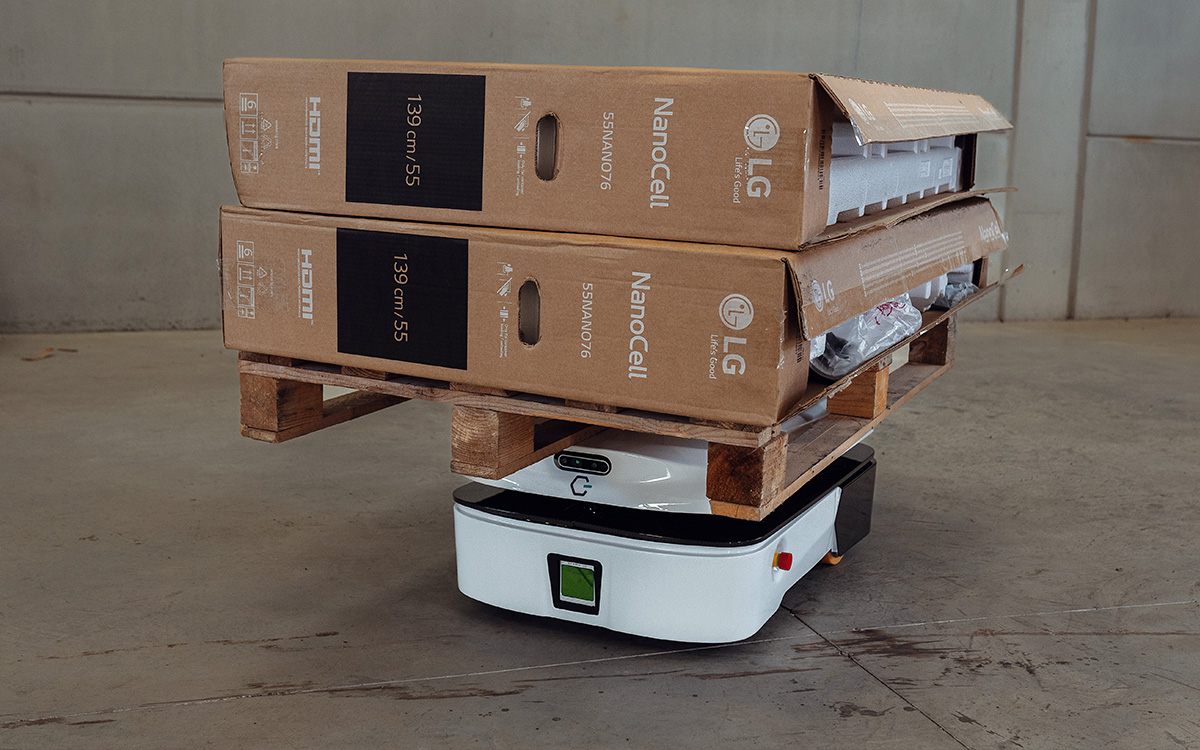
Our AMR Troo can transport loads of up to 300 kg
autonomously in industrial environments.
Unlike traditional guided transport systems (AGVs), these robots can move autonomously, identify obstacles, and efficiently reorganize routes. This flexibility is crucial for industries with changing needs and dynamic processes.
Connectivity and Integration
Another fundamental pillar of this evolution is interconnectivity. Integrating IoT with automation systems allows machines to share data in real time, enabling more precise production control.
Advanced sensors and cloud platforms allow monitoring of every phase of the production process, adjusting variables based on demand or environmental conditions.
Companies adopting these solutions not only improve operational efficiency but also enhance product quality. The ability to analyze large volumes of data allows them to detect patterns, anticipate failures, and make faster strategic decisions.
The Role of Collaborative Robotics
So-called “cobots” have changed the game. Instead of operating in isolated areas away from workers like traditional robots, they are designed to interact safely with humans.
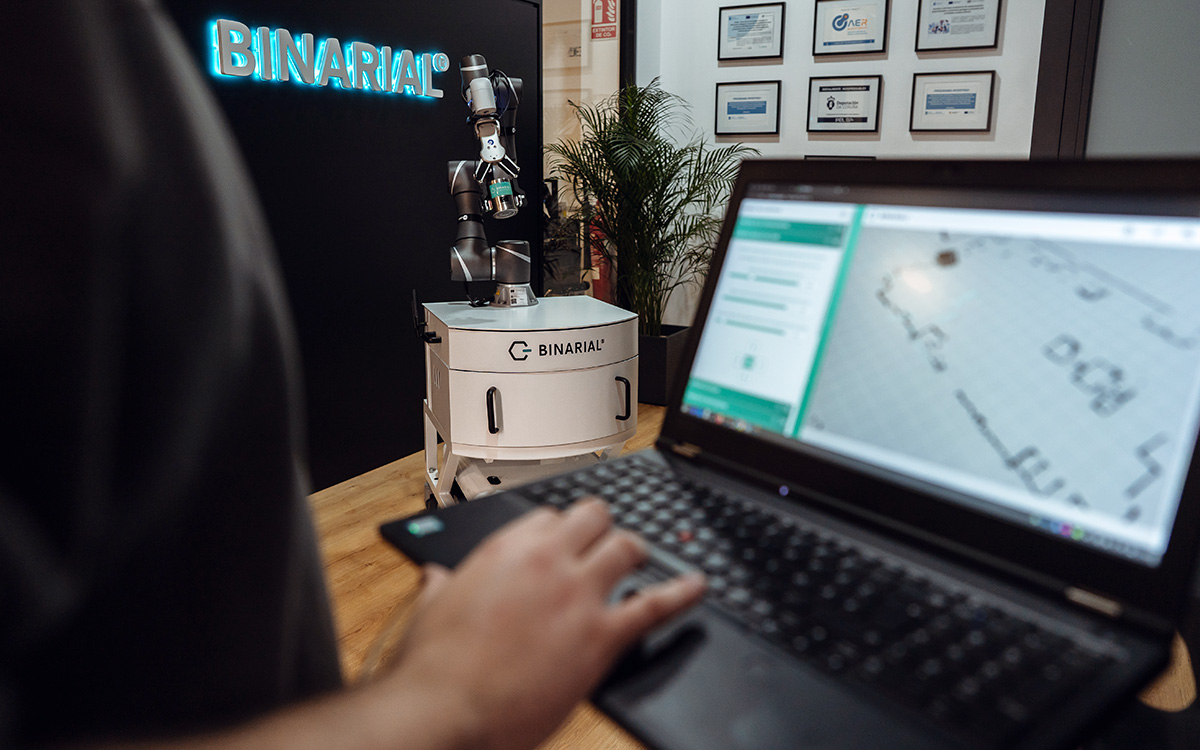
Our autonomous robots can adapt to their environment in real time to any
eventuality, thanks to Artificial Intelligence and state-of-the-art sensors.
This opens a range of possibilities in sectors where full automation is not viable, allowing optimization of tasks without eliminating human intervention.
They can handle repetitive tasks while operators focus on higher-value activities. Additionally, their ease of programming and adaptability make them an affordable and profitable investment for companies of all sizes.
Toward Smarter and More Accessible Automation
Industrial automation is no longer exclusive to large corporations. Thanks to reduced technology costs and the rise of modular solutions, more and more companies can integrate advanced systems into their processes.
We work to provide innovative solutions that allow industry to adapt to this new paradigm.
Our developments in mobile robotics and artificial intelligence are designed to optimize production, improve safety, and increase profitability for our clients.
The future of automation is here, and the companies that know how to leverage it will lead the sector in the coming years. Are you ready to take the next step?