

In recent years, the growing deficit of technical skills in the labor market has become one of the most pressing challenges for companies worldwide.
Factors such as an aging population, lack of training in these fields, and migration toward less physically demanding sectors are creating a significant gap in key industries such as manufacturing, construction, and logistics.
In this context, automation is emerging not just as a trend, but as a strategic necessity to ensure sustainability and operational efficiency.
Robotization as a response
This does not simply mean replacing workers, but reimagining processes with advanced technologies.
For example, as reported in several press articles, in Hong Kong, researchers have developed a robot capable of bending and tying steel bars—a fundamental construction task that has traditionally been physically demanding and risky for workers.
This tool, in addition to mitigating labor shortages, improves safety and productivity while still requiring human supervision, representing a collaborative model between humans and machines.
Cases like this illustrate how automation can address not only labor shortages but also improve working conditions. In sectors such as construction, where the shortage of skilled workers could reach 40,000 by 2027, adopting these technologies is crucial.
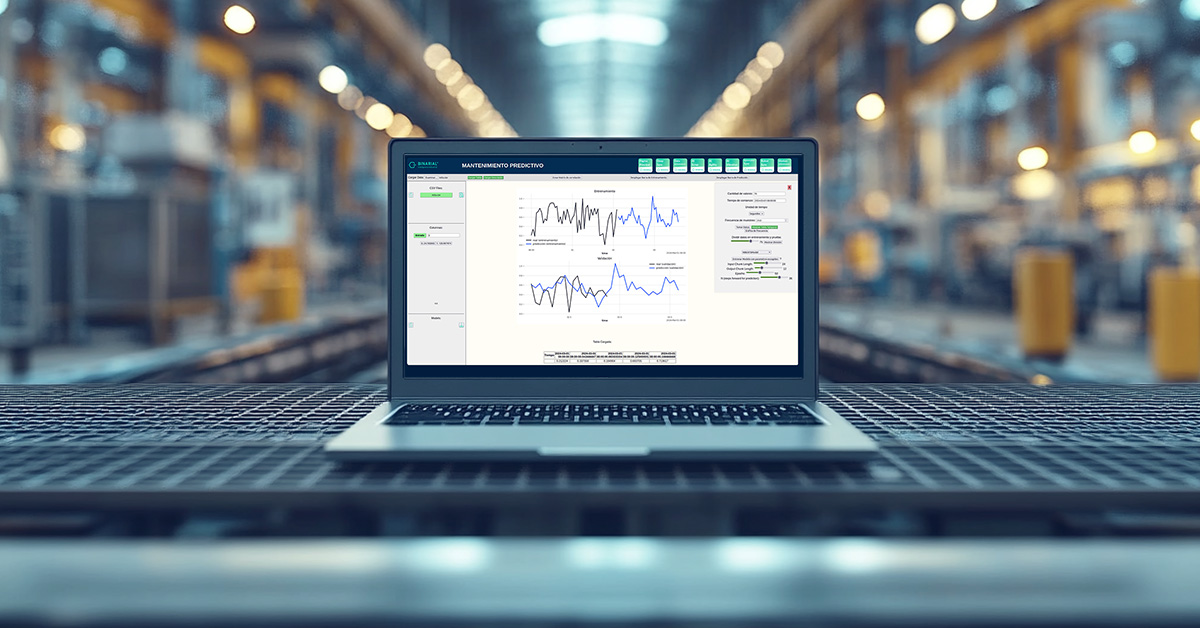
Thanks to AI-based predictive maintenance systems like those developed by Binarial, it is possible to prevent production errors before they occur.
Optimization and predictive maintenance
Beyond increasing productivity, automation is being integrated with artificial intelligence systems to tackle even greater challenges.
This technology is transforming industries by anticipating machine failures before they occur, minimizing downtime and associated costs. This results in more efficient use of resources such as electricity, water, and raw materials, while also optimizing operations in high-demand environments.
Benefits and challenges
The implementation of automated solutions offers clear advantages:
-
Increased efficiency: robots and automated systems can perform repetitive tasks with greater precision and speed.
-
Reduced occupational risks: advanced technologies allow workers to avoid dangerous environments, focusing instead on supervision or design tasks.
-
Scalability: automation enables the expansion of operations without proportionally increasing the workforce.
However, it also presents challenges, such as the initial investment cost and the need for skilled personnel to operate and maintain these technologies.
In this context, companies must adopt a digital transformation mindset that includes not only the incorporation of new technologies but also the continuous training of their teams.
Automation does not mean dehumanization, but rather redirecting human talent toward higher value-added tasks such as innovation and complex problem-solving.
The shortage of skilled labor is a call to action to rethink how we understand work. At Binarial, we believe that the synergy between humans and machines is not the future—it is the present—and we are committed to leading this change in collaboration with our partners and clients.