

In a context where efficiency is crucial for competitiveness, the integration of AI systems enables optimized management of resources such as electricity, water, air, and raw materials.
Additionally, it can anticipate maintenance needs in production machinery, ensuring operational continuity and reducing downtime.
More efficient resource management
The consumption of electricity, water, air, and raw materials can be one of the main operational costs. This is where AI systems offer a significant competitive advantage.
Through advanced algorithms, AI can analyze large volumes of data in real time, identifying consumption patterns that would otherwise go unnoticed. These patterns allow machine operations to be adjusted, regulating the use of energy and other resources, resulting in significant savings.
For example, it can identify peak electricity consumption periods and adjust machine loads to operate during off-peak hours.
This helps reduce operational costs and lower the company’s carbon footprint—an increasingly important factor in industry. Similarly, it can analyze water usage in production processes, proposing real-time adjustments to minimize waste and optimize its use.
Intelligent monitoring for predictive maintenance
Traditionally, machines were inspected according to a fixed schedule, without considering whether they actually needed attention at that moment. This not only generated unnecessary expenses but could also lead to unexpected downtime when a failure occurred before the planned inspection.
Through continuous analysis of data generated by sensors integrated into machinery, AI can detect anomalies and signs of wear before they become serious issues. This allows companies to schedule maintenance only when it is truly necessary—what is known as predictive maintenance.
By monitoring motor vibration, compressor temperature, or pressure in a piping system, AI can detect when any of these parameters begin to deviate from their normal range and send alerts for technicians to perform inspections.
This enables companies to act proactively before a failure causes production downtime, significantly reducing repair costs and avoiding productivity losses.
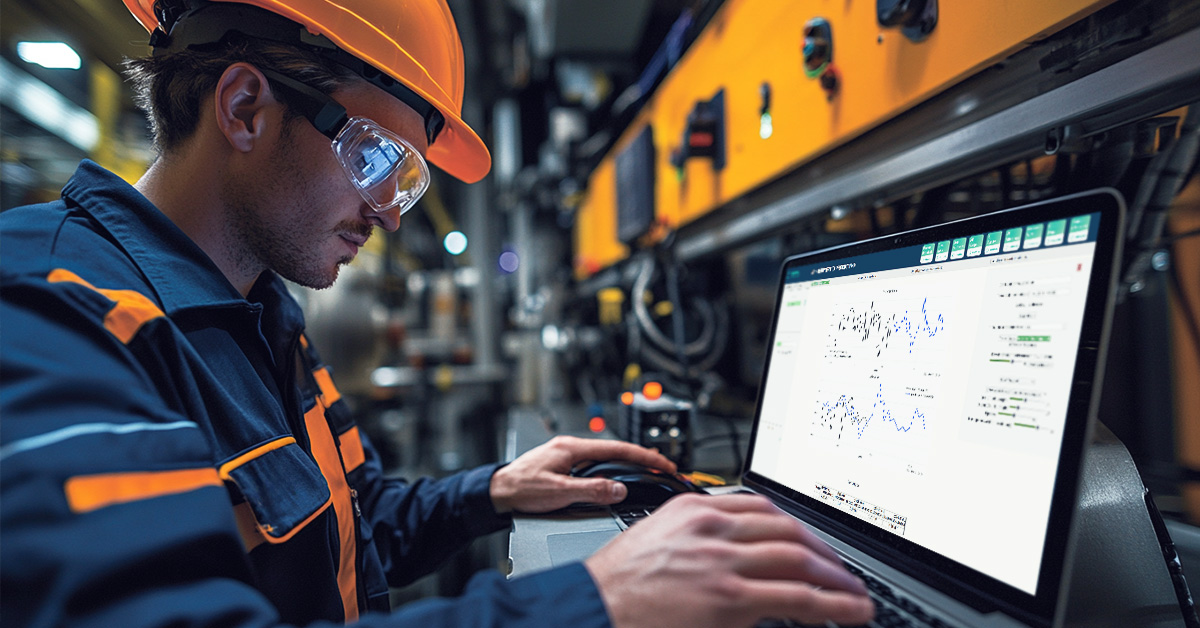
Binarial’s predictive maintenance prevents unplanned downtime by anticipating equipment failures through detailed analysis of data obtained via sensors.
Integration and customization of AI solutions
Every industrial plant is unique, with specific processes, machinery, and requirements. Therefore, customizing AI systems is essential to achieve the best results.
It is not about implementing generic software, but about developing solutions tailored to each specific context. This includes everything from customized algorithms to intuitive interfaces that allow operators to interact with the system easily.
The implementation of AI systems in industry also involves collaboration with technology and production teams to define critical monitoring points and key metrics to analyze.
In this way, companies can ensure that the AI system aligns with their operational and strategic objectives, maximizing return on investment.
Toward a more sustainable industry
By reducing resource consumption and minimizing waste, industries can operate in a more environmentally responsible way—something increasingly demanded by both consumers and global regulations.
It also extends the lifespan of machinery and reduces the need to manufacture new spare parts, which further contributes to sustainability.
In this way, adopting AI systems not only improves business profitability but also aligns companies with the expectations of a world increasingly focused on sustainability.
By 2030, AI technologies are expected to become even more sophisticated and accessible, allowing companies of all sizes to benefit from their advantages.
Adopting these technologies is not just a competitive advantage, but a necessity for companies that aim to succeed in an increasingly demanding market. The future of industry is intelligent, and artificial intelligence is the engine that will drive us toward that future.